
Compliance in Financial Institutions
With the enactment of the Prevention of Money Laundering Act and the Financial Transactions Reporting Act, Financial Institutions were required to appoint a Compliance Officer responsible for overseeing various procedures and systems. These include Know Your Customer (KYC), Customer Due Diligence, training, retention, reporting, and more. Although the Central Bank of Sri Lanka mandated the appointment of a Compliance Officer as early as 1997, the introduction of these new Acts brought forth statutory obligations for financial institutions, particularly with regard to Anti-Money Laundering (AML) measures.

Formation of the Compliance Forum
The need for structured compliance became even more pressing with the establishment of the Financial Intelligence Unit under the Financial Transactions Reporting Act and the issuance of the detailed Know Your Customer Circular in 2006. These new requirements on KYC procedures and ongoing due diligence created a foundation for the unification of compliance officers across banks. A group of compliance officers from local banks convened to address the new regulations and ensure consistency in customer information handling.
Pioneering Leaders in Compliance
The initiative was championed by prominent figures in the industry, including Mr. R M P Rathnayake from HNB, Mr. Stanley Fernando from Commercial Bank, Ms. Summaiya Macan Markar from Peoples Bank, Ms. Ruwani De Silva from NDB, and Mr. Prasanna Kannangara from DFCC, among others. Their collective vision led to the formation of the AML Officers’ Association, which became the key force in aligning the industry’s compliance officers around the AML/KYC standards.
Key Achievements of the AML Officers' Association
One of the association’s most significant accomplishments was the development of a unified KYC information form/mandate. This form was widely adopted across banks, with minimal customizations, ensuring consistency and standardization in KYC practices. Furthermore, the association played a crucial role in evaluating and recommending AML software for the entire industry. This collective effort was supported by a technical committee comprising IT specialists from various banks, further solidifying the industry’s commitment to robust AML and KYC compliance.
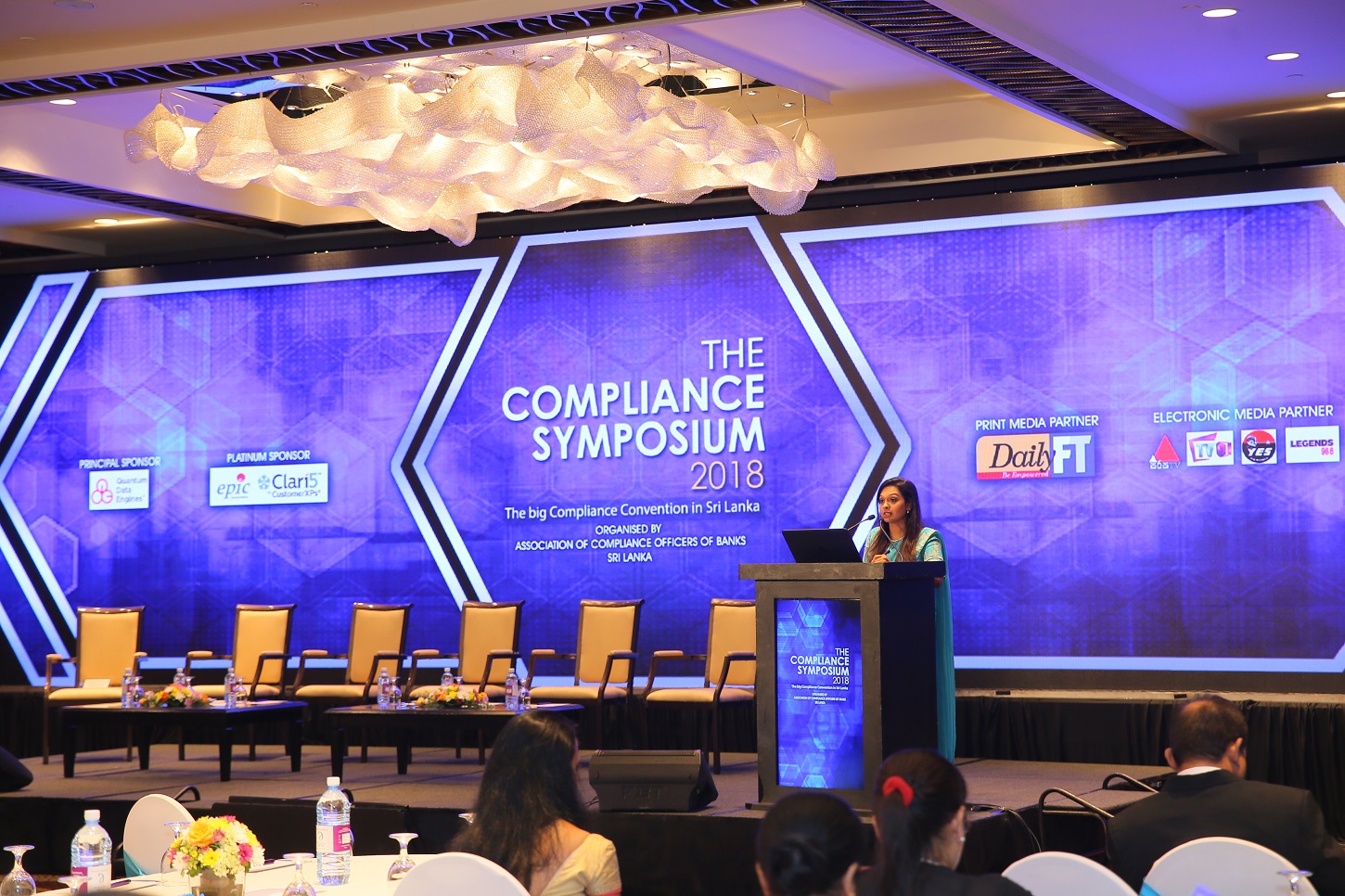
The Birth of the Association
After the success of the common KYC form and related software, Compliance Officers identified the need to expand the forum's scope. They sought to address the challenges posed by the ever-increasing regulatory horizon. The unanimous decision was to extend the forum beyond AML compliance to encompass all aspects of regulatory compliance. This collective effort aimed to enhance the compliance function's effectiveness, benefiting the industry and aligning with regulatory objectives.
Formation and Expansion of the Forum
After the success of the common KYC form and related software, Compliance Officers identified the need to expand the forum's scope. They sought to address the challenges posed by the ever-increasing regulatory horizon. The unanimous decision was to extend the forum beyond AML compliance to encompass all aspects of regulatory compliance. This collective effort aimed to enhance the compliance function's effectiveness, benefiting the industry and aligning with regulatory objectives.
Formal Establishment
In March 2010, the Association of Compliance Officers of Banks was formally established with the following key objectives:
- Promote common understanding among Compliance Officers on regulations.
- Share experiences and knowledge to build effective compliance systems.
- Plan and organize training programs in compliance.
- Facilitate dialogue with regulators through a unified approach.
First Leadership and Constitution
Funding and Membership
In 2012, the Association introduced an annual membership fee to strengthen its operations and achieve its objectives. This initiative was widely accepted, and today, nearly all Local Licensed Commercial Banks, Licensed Specialized Banks, and branches of Foreign Banks are members of the Association.
Industry Collaboration and Training
The Association has facilitated industry-wide discussions on FATCA compliance and organized shared consultancies for member banks. It has also arranged sessions on compliance software tools and initiated training programs for risk-based compliance, aligning with Basel Recommendations.
Key Achievements and Initiatives
Since its formation, the Association has achieved several milestones, including:
- Organizing monthly meetings to share compliance experiences.
- Hosting guest lectures on critical topics like Exchange Control, FATCA, and AML compliance, featuring eminent speakers.
- Negotiating with the FIU on amendments to the KYC gazette in 2011.
- Representing the banking industry during FATF country evaluations.
- Conducting discussions with CBSL departments such as Bank Supervision, Exchange Control, and FIU.
Challenges and the Way Forward
Compliance in the banking sector has gained formal recognition, with Compliance Officers now holding key executive roles. The role has become increasingly challenging due to expanding regulations, cross-border requirements, and balancing compliance with business objectives.
Vision for the Future
To address these challenges, the Association emphasizes the need for:
Sharing experiences and best practices at the industry level.
Enhancing knowledge of international compliance standards.
Maintaining continuous dialogue with all stakeholders.
ASSOCIATION OF COMPLIANCE OFFICERS OF BANKS

Sri Lanka Executive Council 2015-2016
EXECUTIVE COMMITTEE

Sri Lanka 2015-2016
ASSOCIATION OF COMPLIANCE






- Provide a forum for discussion of compliance issues
- Represent the views and, where necessary, negotiate on behalf of members in dealing with relevant authorities
- Undertake, promote and facilitate studies and discussions in the field of compliance in banking and allied subjects within and outside Sri Lanka.
- Organize and promote research and undertake studies in the field of compliance.
- Plan and organize teaching and arrange training programmes in the field of compliance in banking and allied subjects.
- Promote understanding, cooperation and friendship with similar associations within and outside Sri Lanka.
- Undertake, promote and conduct on its own initiative or in collaboration with local or foreign associations such surveys and studies on compliance in banking in Sri Lanka or any other country or region of the world.
- Affiliate with any National, Regional or International Associations in related fields and with cognate aims.
- To reach a consensus among the membership with regard to the approach to be taken when negotiating with regulatory authorities on new laws and regulations that are enacted.
- Serve as a focal point for bringing issues faced by Compliance Officers to the attention of the CBSL, through close coordination with Sri Lanka Banks Association (SLBA) when and where possible.
- Engage in any other activities connected with or incidental to the above objectives.